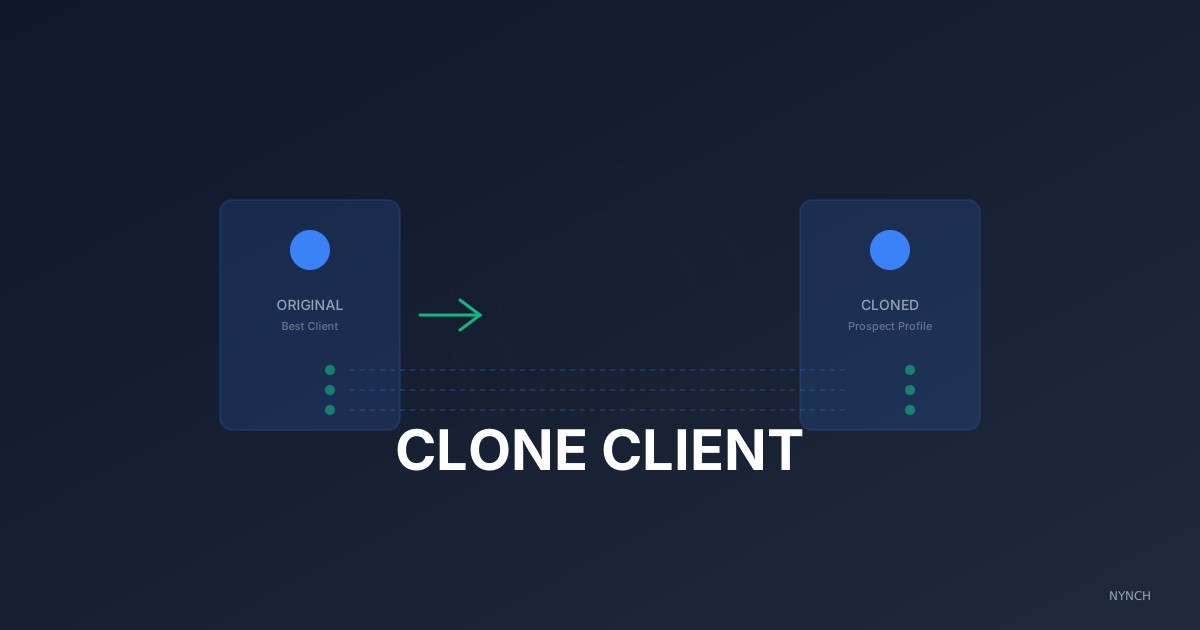
The most reliable way to fill your network with full-fee clients is to stop reaching out blind and start systematically copying the conditions that produced your best existing client. Your ideal client already exists in your contact list. You just need to reverse-engineer why they were a perfect fit and find ten more who match the same profile.
Most consultants I work with spend most of their week on the clients who pay the least. One client is a dream. They pay on time, they respect your boundaries, and they trust your advice. Three others are nightmares. They negotiate every penny, call you on weekends, and ignore the strategy they paid for. You keep taking the nightmare work because you need the revenue, and you do not know where to find more of the dream ones.
If you never sit down and work out why your best client is your best client, you are guessing. You cast a wide net and hope for a tuna. Most days you pull up old boots.
There is a better approach. Take the pattern behind your favourite account and use it to find ten more companies that look the same.
1. The “Tech Stack” Spy to find operational twins
Companies that use the same software usually have the same problems. If your best client uses HubSpot, Slack, and Xero, and they hired you to fix their operational chaos, other companies running that exact stack likely have the same mess under the surface.
This is technographic targeting: finding companies based on the tools they run, not just their industry or size. It works because tools predict internal culture. A company on Microsoft Teams runs differently from a company on Discord. The stack is a fingerprint of how they operate day to day.
That gives you a high-trust opening. You can say, “I help companies who run on HubSpot and Xero fix their invoicing bottleneck.” You sound like someone who already understands their world, not someone who scraped a list of job titles.
Concrete Example: Your best client is an e-commerce brand on Shopify using Klaviyo.
Action Step:
Go to a site like BuiltWith or Wappalyzer. Type in your best client’s URL. List their top 5 tools. Now search for other companies in your sector using those same 5 tools. Add 3 of them to your contact list.
2. The “Backwards Referral” map to find the source
People with similar profiles tend to know each other. That is why using project success for warm introductions works so well. Your best client did not appear from nowhere. They came from a specific community, investor portfolio, or former employer.
Work backwards from the engagement. Did they come from a particular VC firm? Did they used to work at Google? Once you find the source, go back to that well and look for the same profile again.
The upside is quality. If a VC firm introduced you to one strong founder, they almost certainly have twenty more in the same portfolio who look and act the same way.
Concrete Example: Your best client was funded by SeedCamp.
Action Step:
Look at your best client’s LinkedIn profile. Where did they work before this? Or who invested in them? Go to that source’s page. Look at the People tab. Those names are your next targets.
3. The “Hiring Trigger” match to spot the growth phase
Your best client probably hired you at a specific stage of growth. Maybe right after they raised Series A. Maybe right after they hired a VP of Sales. That moment of change is what made the engagement work, not the industry label on their LinkedIn page.
Cloning that pattern means looking for other companies currently hiring for the same role. If you are a sales consultant and your best client hired you when they reached five sales reps, look for companies posting their sixth sales role.
The upside is timing. You reach out when the pain is becoming acute, not six months after they have already patched it with someone else.
Concrete Example: Your best client hired you when they appointed a Head of People.
Action Step:
Go to LinkedIn Jobs. Search for “Head of People.” Filter by your target industry. The companies hiring for this role today are the companies that will need you in about 30 days.
How Nynch Helps You With This
Manually researching the tech stack and hiring patterns of every contact is a full-time job. You need the list, not the research.
Nynch’s Opportunity Miner does the cloning work for you.
Profile the best: Nynch analyses your successful engagements to identify common patterns: industry, tech stack, company size, and growth rate.
Build the list: The AI scans the market for companies that match your best clients’ pattern and serves them to you as recommended contacts.
Enrich the context: Nynch tells you why they matched (for example, “Uses Salesforce + Hiring Sales VP”), so you have a specific hook for the first email.
Stop filling the week with nightmares. Put the same effort into finding more of the clients who already work.
Read next
- The intent radar, exactly who to call today, read buying signals so your pipeline runs on intent, not guesswork.
- 5 Ways To Structure Your Growth Hours And Never Have A £0 Revenue Week Again, Consistency beats intensity.
- The client command centre, the dashboard consultants actually open every morning to spot risk and expansion early.
Frequently Asked Questions
How do I find more clients like my best client?
Start by profiling your best client: their industry, company size, tech stack, and the trigger that caused them to hire you. Then search for companies that match that same profile using tools like LinkedIn Sales Navigator, BuiltWith, or Crunchbase. The goal is to replicate the conditions that made that first engagement successful.
What is technographic targeting and how does it help consultants?
Technographic targeting means finding contacts based on the software tools they use. Companies using the same tech stack often share the same operational problems - which means if you solved those problems for one client, you have an immediately relevant pitch for every company running identical infrastructure.
How do I use hiring signals to time my outreach to contacts?
Monitor job boards for companies hiring for a specific role that typically precedes the need for your services. If your best client hired you after appointing a Head of People, search LinkedIn Jobs for that role weekly - companies posting it today are likely to need you within 30 to 60 days.
How do I get referrals from my best client’s network?
Trace where your best client came from - a specific VC portfolio, a former employer, an industry association. Then go back to that source and look for similar profiles. One great client usually signals that an entire ecosystem of similar clients is accessible through the same channel.