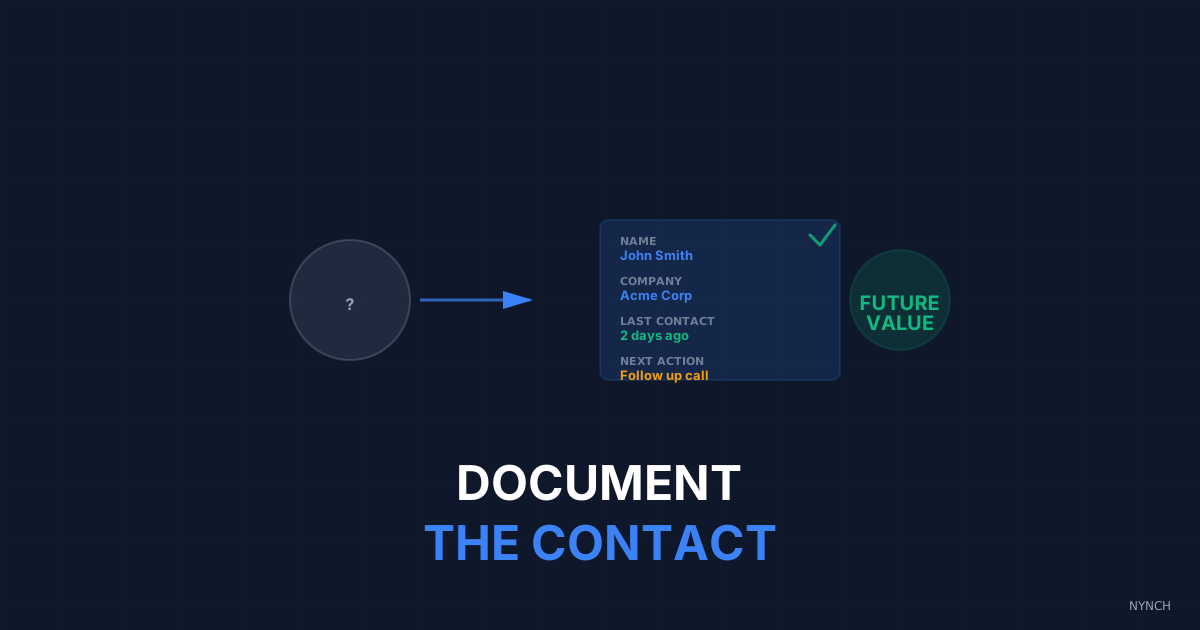
The meeting is the spark. Documentation is the fuel. Without a record, every contact you meet at a conference becomes a ghost within months. Writing them down creates searchability, lets you go beyond the roughly 150 relationships human memory can track, turns your network into something you can hand to someone else, and forces you to decide whether each new person is worth a next step.
A lot of consultants confuse meeting people with building a network.
You go to a conference. You shake fifty hands. You feel productive. Then you put the cards in your pocket and go home without saving a single name, role, or next step.
Three months later those fifty people are gone. They are ghosts. You cannot contact them because you do not have their details. The return on that conference is effectively zero.
The meeting was only the spark. Saving the contact, tagging them, and putting a date on the next step is what turns a pleasant chat into a business asset. Conversation without a record feels like progress. It is not. Here is why the write-up beats the chat.
1. Documentation Creates Searchability
You cannot search a memory. You can search a database.
If you write down “John / Architect / Needs help with HR,” John becomes something you can find again. Six months later, when you launch an HR service, you search “HR” and John appears. If you never captured him, you start hunting for new contacts from scratch even though you already met the right person.
2. Documentation Enables Scale
You can only hold so many relationships in your head. Beyond a point, people drop out of active memory whether you like them or not, and it happens far earlier than your contact count suggests.
If you want a network of a thousand, you need a record outside your head. Documentation is how you stay in touch with people you would otherwise forget. It is not vanity collecting. It is stopping the ones you already earned from vanishing when the week gets busy.
3. Documentation Protects The Asset
If contacts live only in your head, they leave when you leave.
If they live in a system, they belong to the business. You can hand the list to an assistant and say:
“Send gifts to these 50 people.”
You cannot delegate your memory. You can delegate a list. That difference matters the day you are ill, away, or want help for a quarter.
4. Documentation Forces Intent
When you have to choose a next-step date in Nynch, you are forced to decide:
“Is this person worth it?”
That filter saves time. It makes you qualify the network instead of hoarding every card you were handed. You stop collecting noise and start building a list you would actually act on. Be honest: if you mark everyone “follow up next week,” the filter fails.
How Nynch Helps You With This
Documentation is boring. That is why people skip it. Nynch makes the capture step almost automatic so the habit sticks.
The business card scan: Snap a photo. Nynch reads the text, finds the LinkedIn profile, and saves the record. About ten seconds.
Auto-tagging: Nynch suggests tags from the job title (for example Marketing or C-suite) so the list is segmented from day one, not after a rainy Sunday of cleanup.
The voice note log: You do not have to type. Say “John is interested in Q4” and Nynch attaches the text to his profile while the detail is still sharp.
Read next
- Your CRM should not do more, it should pay attention, why most CRMs fail consultants and what relationship-led growth replaces them with.
- The Honest Test for an AI CRM (Most Fail It), Every CRM in 2026 claims to have AI.
- The best AI CRMs for consultants, a side-by-side comparison of every serious option for solo consultants and boutique firms.
Frequently Asked Questions
Why is documenting a contact after meeting them so important for consultants?
The meeting is just the spark - documentation is the fuel that keeps the relationship alive. Without a record, a contact you met six months ago is functionally gone: you cannot find them, search for them, or include them in targeted outreach when an opportunity arises. The ROI of every conference or networking event you attend is determined almost entirely by how well you document the people you meet.
What information should a consultant capture when documenting a new contact?
Capture the information your future self will need to find them and continue the relationship: their name, role, company, where you met, one personal or professional detail from the conversation, and a next-step date. The goal is to make the contact searchable and actionable - not just to have a record that they exist.
How does a well-documented network help consultants find new business opportunities?
A documented network is a searchable business asset. When you launch a new service or hear of an opening, you can search your database by role, industry, or keyword and surface contacts who are relevant immediately. Without documentation, you start every new opportunity from scratch rather than drawing on the years of relationships you have already built.
When is the best time for a consultant to document a new contact?
Document immediately - either during the conversation if you have a voice capture tool, or in the first few minutes after it ends while the context is fresh. Waiting until you get home means losing the specific details that make a contact record useful. With modern tools, the whole capture process takes under thirty seconds.