Your rejected proposals are not a graveyard. They are a waiting room. The clients who said no had real problems that still exist, and the objections that blocked the work are usually temporary. Mining your proposal archive for timing triggers and scope gaps is the highest-return sales activity most consultants never do.
You spend days writing a careful proposal. You send it. The client says no, or worse, nothing. You feel defeated, archive the file, and never open it again. Over five years you build up hundreds of these “dead” documents. You treat them as failures.
I see that as a waste of your own work. A proposal is a snapshot of a problem that existed at a point in time. Once you spot something worth revisiting, learn how to draft extension proposals that get signed quickly. Just because they did not buy then does not mean the problem went away. Often they hired someone cheaper who failed, or they did nothing and the problem got worse.
Those documents are not dust. They are a record of people who already told you what they needed, why they hesitated, and when they might be ready. Three places to look first.
1. The “Not Now” filter to uncover timing triggers
You often misread rejection. When a client says “We can’t do this right now,” you hear “We never want to do this.” You archive the opportunity and forget the “right now” part. The timeline they gave you is buried in a PDF or an email chain you have not opened in six months.
Mining for “not now” means scanning old scopes of work for timeline-based objections. Did they mention a budget cycle in October? A board meeting in January? Those dates are commercial triggers, not polite brush-offs.
The value is coming back when the friction is lowest. If you email them on or after the date they named a year ago, you look organised rather than pushy. You are not inventing a pitch. You are following their schedule.
Concrete example: A client rejected a proposal in April because “We are moving office.” That move is now done. The objection is gone.
Action Step:
Search your document storage for the phrase “quarter” or “budget.” Open three proposals from last year that contain those words. Check whether the date they mentioned has passed. If yes, email them:
“I set a reminder to circle back once [Event] was done. Is the dust settled enough to revisit this?“
2. The “Price Reject” salvage to sell the ‘Lite’ version
Many proposals fail on sticker shock. The client liked the solution but could not swallow the £50k fee. They went with a cheaper option, or they stalled.
Mining for price rejects lets you return with a different shape of offer. You are not discounting the original work. You are offering a lighter version or an audit. If you know they wanted the outcome but hated the price, you already have a qualified contact for a lower-tier service.
The honest upside is getting paid from relationships you already paid to acquire. A £5k audit is better than a £0 rejection. This will not revive every lost proposal. Some people truly had no budget and never will. Start with the ones who liked the idea and only flinched at the number.
Concrete example: You proposed a full website rewrite (£20k). They said no. Come back now with a conversion audit (£2k).
Action Step:
Identify your five biggest lost opportunities from the last 12 months. Draft a downsell that solves about 20% of the problem for about 10% of the price. Send it:
“I was thinking about our chat. If the full project is still off the table, I designed a smaller ‘Audit’ package that might get you unblocked for a fraction of the budget.”
3. The “Scope Creep” retrospective to upsell active clients
Sometimes the gold is not in the rejected proposals. It is in the accepted ones. When you write a scope of work, you often include optional extras or Phase 2 items that the client cuts to save money. You forget about them. They forget about them.
Looking back for unfinished scope means asking what you diagnosed but never fixed for current clients. You already have trust. Raising a cut item six months in is not a cold pitch. It is finishing work you both once agreed mattered.
The potential is more revenue from people who already pay you, without a new introduction. You are simply completing the job you started.
Concrete example: You proposed strategy plus training. They only bought strategy. Six months later the strategy is sitting on a shelf because they never bought the training.
Action Step:
Open the signed contract for your best current client. Look at the exclusions or options section. Pick one item they did not buy. Ask them on your next call:
“I noticed we never got around to [Item]. Is that becoming a bottleneck now that the main project is live?”

How Nynch Helps You With This
Searching hundreds of PDFs for a keyword is miserable. Most consultants will not do it by hand for long, even when they know they should.
Nynch searches the permitted proposal set and prepares possible timing signals for you to verify.
It reads the docs: Nynch scans the text of proposals you have sent (PDF, Word, or email).
It extracts the intent: The AI looks for timing objections (for example, “Call us in Q3”) and can set a reminder to follow up on that date.
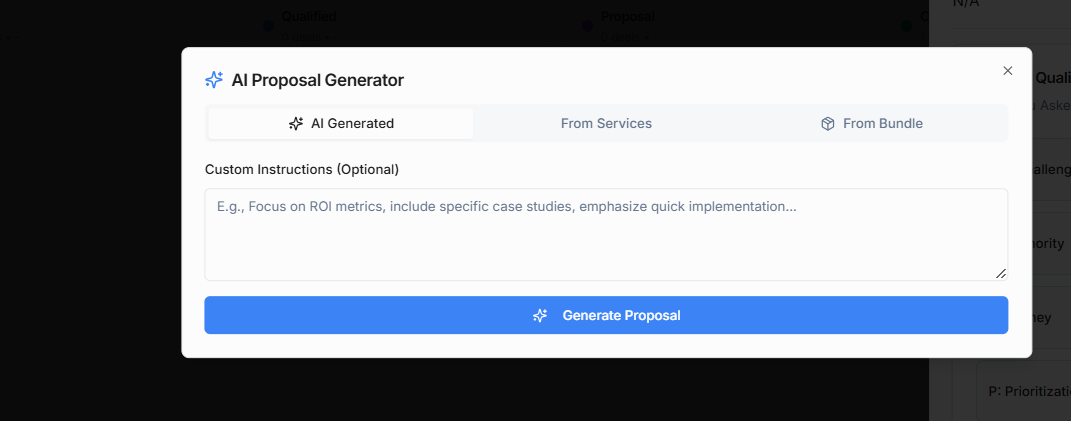
It spots the gap: Nynch compares proposed scope against signed scope so you can see services the client did not buy, and get a nudge when it may be the right time to raise them again.
Run the manual audit once. It teaches you what good looks like. Then decide whether you want that scan running in the background every week.
Read next
- AI for consultants, what actually helps, the parts of AI that move revenue, and the parts that just make the dashboard prettier.
- The Best Examples Of Automated Workflows That Replace Your Weekend Data Entry Shift, Stop working weekends to “catch up” on admin.
- Your CRM should not do more, it should pay attention, why most CRMs fail consultants and what relationship-led growth replaces them with.
Frequently Asked Questions
How do I find revenue opportunities in my old consulting proposals?
Start by scanning rejected proposals for time-based objections - phrases like ‘not now’, ‘contact us in Q3’, or ‘after the merger.’ These are not permanent rejections. they are scheduled buying windows. If the date they named has passed, email them immediately referencing their own timeline.
How do I re-engage a client who rejected my proposal on price?
Return with a downsell rather than a discount on the original scope. Offer a smaller audit, diagnostic, or roadmap session that delivers 20% of the value at 10% of the cost. A client who rejected a £20k project because of budget is often a willing buyer for a £2k version that gets them unblocked.
Can AI help consultants find missed revenue in old proposals?
Yes - AI tools can scan proposal documents for timing triggers, scope items that were included but not signed, and pricing objection patterns. Rather than manually re-reading hundreds of files, AI can surface the specific contacts that are most likely to convert today based on the conditions that caused the original rejection.
How do I upsell current clients using their original project scope?
Review the original proposal for items the client cut to reduce budget at the time. These were problems you diagnosed but did not fix. Six months into delivery, the consequences of not fixing them are often visible and acute - raising them in a status call is not a new pitch, it is completing the work you both agreed was needed.