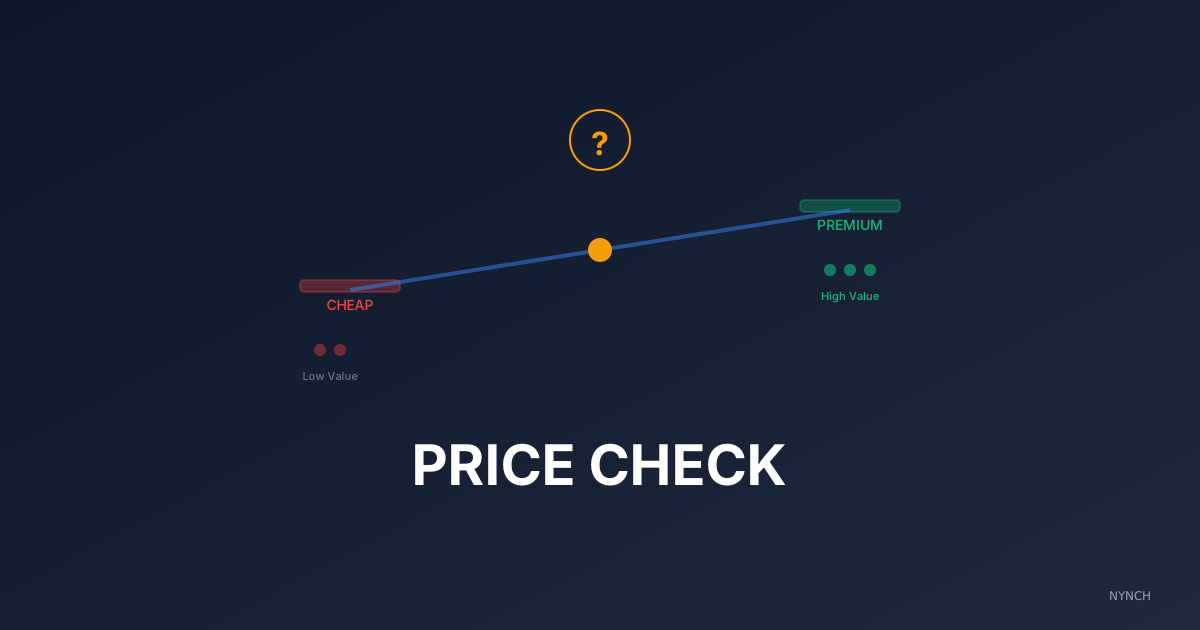
The difference between premium and expensive is not the number on the invoice. It is whether the client can clearly see the value they are buying. If they ask for hourly breakdowns, compare you to freelancers, or get free extras from you to “make up for” the fee, the problem is rarely the price itself. It is the value story.
Plenty of good consultants flinch when they say their day rate out loud. You have done the maths. You know you need something like £1,500 a day to run a profitable practice. Then you say the number and the imposter feeling hits. You worry you are too expensive. You worry they will laugh. So before they even object, you add a softener:
“But we can be flexible,” or “That is the standard rate, but for you…”
Premium means high value that costs a lot. Expensive means low (or unclear) value that still costs a lot. When the value is obvious, people pay without drama because the return is easy to see. When it is not, they pay resentfully or they leave for the cheaper option.
I should concede the weak point: sometimes you really are overpriced for the work on the table. A junior project sold at a senior rate is expensive, full stop. The tests below assume the work is worth the fee. They catch the more common case, where the fee is fair and the story is weak.
Three signals tell you which side of the line you are on.
1. They Ask You to Break Down Your Fee by Hours
“Can you break down how many hours this will take so we can understand the fee?”
If a client asks this, the value story has not landed. They are trying to turn you into a commodity. This often happens when clients are comparing you to competitors. They are building a spreadsheet, not evaluating judgment. They are treating you like labour paid by the hour, not an expert paid for an outcome.
If the fee is justified by value (“this will save you £100k in tax”), the hours do not matter. Ten minutes or ten days, the outcome is still £100k. When they ask for a breakdown, they are checking your maths because they do not trust the story. They suspect padding. In that moment you are expensive, not premium.
Action Step: Do not send an hourly breakdown for a value-based project. Reply along these lines:
“I do not bill by the hour because I do not want to be rewarded for working slowly. I bill for the outcome. The fee is for delivery of the £100k saving, regardless of the time input.”
2. They Compare You to a Freelancer on a Gig Site
“We found a freelancer online who can do it for half that.”
If you are being compared to a generic freelancer on a gig platform, you have not differentiated the offer. You also need to understand whether you’re the preferred choice or just making up numbers in their process. You look interchangeable.
A heart surgeon is not priced against a GP, even though both hold scalpels. The GP is cheaper. The surgeon is premium because the cost of being wrong is higher. If your branding, response speed, and proposal look like the cheap option, you will be judged by the cheap option’s price. You failed to make the risk of the wrong hire visible.
Action Step: Pivot to risk, not to defence of your day rate.
“The freelancer is cheaper, absolutely. But if they get the strategy wrong, it can cost £50k to fix. My fee includes getting it right the first time. Is this a project where you can afford a version two?“
3. You Throw in Free Work Because You Feel Overpriced
If you keep doing extra work “for free” to keep the client happy, that is usually pricing guilt. Deep down you suspect you are overcharging, so you over-deliver to compensate. Weekend calls. Extra reports. Scope that was never in the agreement. You erode your own margin because you are not confident in the core deliverable.
Premium consultants hold boundaries. They deliver exactly what was promised, to a high standard, and charge for additions. Expensive consultants (in the resentful sense) try to buy affection with freebies. Clients notice. Free extras teach them that your rate is negotiable in both directions.
Action Step:
Audit your last project. Did you do work that was not in the statement of work? Stop doing that as a habit. If the client asks for more, send a change order with a price attached. If you are premium, your time has a price tag.
How Nynch Helps You With This
Price is a story, and stories need evidence.
Nynch helps you keep a record of wins and savings you have delivered for clients over time, so when you quote a fee you can point to past results rather than assert your worth from scratch. Proposal structures that anchor the fee to the client’s outcome (not your hours) sit in the same place. Over time you can also see how often you win at different price points, which is a more honest signal than gut feeling about whether you should raise fees.
None of that replaces a clear value argument in the room. It stops you arguing from memory and nerves alone.
Read next
- The intent radar, exactly who to call today, read buying signals so your pipeline runs on intent, not guesswork.
- Unforgettable Lessons After Losing £50k Engagements To “The Drift”, Opportunities don’t always explode because sometimes they just drift away.
- The client command centre, the dashboard consultants actually open every morning to spot risk and expansion early.
Frequently Asked Questions
How do I know if my consulting rate is too high or genuinely premium?
The clearest signal is whether clients ask for an hourly breakdown. If they do, they are treating you as a commodity and your value story has not landed. Premium clients pay for outcomes, not hours - if they ask about hours, the pitch needs to change before the price.
How do I justify a high consulting day rate to clients?
Anchor the fee to the value of the outcome, not the time it takes you to deliver. ‘This engagement will save you £100k in operational waste’ makes a £20k fee feel like a bargain. ‘I charge £2,000 per day’ invites calculation and comparison to cheaper alternatives.
What should I do when a client compares me to a cheaper freelancer?
Pivot immediately to risk. A cheaper freelancer getting the strategy wrong has a remediation cost that often exceeds your original fee. You are not competing on price - you are competing on the cost of failure. Make the risk of the cheap option visible before defending your own rate.
How do I stop scope creep eroding my consulting margins?
Treat any work outside the signed scope as a change order with a price attached, every time. Doing extra work for free to compensate for pricing guilt signals to the client that your rate is negotiable in both directions. Premium consultants deliver exactly what was agreed, to an exceptional standard, and charge for additions.